What do we notice? Obviously we notice an extremely creepy looking clown with a cup on his nose. But we also notice the way he is marketed directly to children. This commercial came out in 1962 when kids were gaining more and more of the purchasing power, and watched a load of TV. Kids would then convince their parents to take them to McDonald's where a "hamburger-happy clown" lived. What more could kids want?
And now they've got Dad on board. This commercial shows that the only way dad can be a hero is by taking his kid and all his kid's friends. And really, McDonald's doesn't cost that much, so why not buy your child's love? "McDonald's loves people and people love McDonald's . . . especially little people." McDonald's already knows they've got the children. This commercial first aired in 1965, so it only took 3 years. Of course, what kids wouldn't be in love with this.
Then, McDonald's introduced new products, thus expanding the world of McDonald's. The Big Mac was the signature sandwich. Breakfast was introduced so McDonald's opened five hours earlier. Then, the McChicken and McNuggets The McRib. Then, salads and McDLT's so you could pretend to be healthy. McFlurries, coffees, and everything else. Is there anything McDonald's won't sell.
Next blog, we'll hit up part 2 of McDonald's advertising.
Taking a small break from advertising to bring up a subject that should have been mentioned long ago. There have been lots of posts on this blog about Language, yet we missed on the one that affects human more than any other-- the visual language.
In terms of telling a story, it was the ancient production of plays that cemented in our minds, how visual narrative works. You have the proscenium arch.
This is the frame that the audience views. If characters walk to the right or left, they exit the frame of the stage, and this motion registers to us, that they have left the scene. They are not involved in the story currently and they are doing something else within their own time and space. Additionally, when they move closer to us, we know that they are becoming more personal and intimate. Perhaps they are about to divulge a secret break the 4th wall. It all makes rational and logical sense to our brains.
However, this all fine and dandy for theatre. But, commercials, television, and movies do not take place on a stage. Their frame is the camera, and it is mobile. Rather than the characters moving, we move the camera. And this idea actually took Hollywood several years before realizing. If you look at some of the earlier films from cinema history, you'll notice the camera stays in one place, and the action looks just like it might on a stage.
Just look at the first scene. The frame is static.
It wasn't until D.W. Griffith in 1915, made a story where the camera moved to change the frame of the characters. Decades later, and it is still the dominant method of using cameras and film. Over that time period, however, we have determined the three fundamental shots of the visual narrative. They each have similar theatre counterparts.
The Wide (or Long) Shot
It serves to establish. It allows us to see the context of the characters, and their connection and relationships between each other. It sets the scene and is excellent tool for creating distance between the audience and the story.
The Medium Shot
When you can see just the top half of a body, you know it's a medium shot. When we talk to people, this is how we usually see them in real life. That's why this is the shots you normally get when a news anchor is talking. They want to appear personal and honest, like they are in your own living room. In movies, its where most of the exposition and story will take place. It's great for dialogue scenes.
The Close-Up
This is when we zoom in real close on something. It serves as an exclamation point. It draws attention to the object or the character and it invades our personal space. It is often used to build tension or suspense, which is why it's frequently found in horror movies and spaghetti westerns.
And those are the three ways, we relay all visual narratives. A typical scene starts wide, goes medium, then close-up, then medium, and then back to wide. That's because we start by revealing the world before getting to the finer details. It's just that easy.
Now that we've gotten past the innocence of the previous three decades, it's time to rev up our engines in the 80s, 90s, and 00s.
1980s
What kind of mpg does this car get? What kind of engine does it have? What safety features are included? We're not going to find out the answer to any of these questions, because this car and this commercial are not about those types of things. This commercial wanted to tell a story. Whether you quit your job, and go out on your own, the Mercury will be there for you. This commercial also differentiates itself by the market its choosing to sell to. There's not a hint of male undertone in this commercial. You've come a long way, baby!
1990s
It would seem that for the 90s, the Mercury brand was struggling a little, and this advertisement certainly doesn't seem like it would help. In this spot, we get no information about the car itself and only vague references to why we should drive it. Commercials in the 90s were much more about the humor. They were silly, and they hoped people would buy their cars based on memory alone.So instead of getting to know a car, we get a soap opera parody, and bad puns.
"The Mercury Mountaineer. Not a lot going for it."
2000s
And here in this spot, we get a sort of mix of the 80s and the 90s. Is it funny? Yes. Does it have an engaging story? Yes. And does it sell a benefit of the car? Yes.
This is a truly great car commercial, and it's important to realize how excellently each commercial captured its era. Listen to the way announcer voice has changed or the way cars are depicted in the last 50 years. It's amazing the road that automobile advertising has followed until we arrive a quality commercial like the one above.
Rather than continuing with cars, the next blog post will talk about the evolution of McDonald's advertising. Stay tuned!
Today we'll be looking at the difference between car commercials in the 1950s, in the 1960s, and in the 1970s.
And just for fun, we'll be looking at how Mercury has updated with the times to advertise to what people really want.
1950s
In the 1950s, people wanted "miles and miles of smooth riding comfort," and "lounge-rest foam-rubber seat cushions" and they really wanted "Merco-therm ventilating" (whatever that means).It's evident that people were looking for a car that did everything it was supposed to. It should be the latest technology in comfort and providing a smooth ride. They wanted their ride to be "Better in Economy."
Another interesting is the shots of the car itself. In this TV spot, every image of the car seems very clinical and precise. It's nothing too fancy, just showing an all-around car that's "Better than ever in every way."
1960s
Turn your volume up for this one. It's very quiet.
"We couldn't make comet much tougher, so we made it more beautiful." What a perfect line to ring in the 60s with. This was the period when cars started to become fetishized. Notice how the camera slowly spins around the car while the announcer talks in a hushed, quieted voice. It's almost sensual!
"More graceful proportions" Ooh!
"Four-speed stick, bucket seats" Aah!
"Warm walnut coloring of its dashboard" Oh my!
While the Mercury Comet still claims to be a durability champion, people are not buying it for its reliabilty. In the 1960s, they bought it to look good.
1970s
Remember to turn your volume back down.
It's the 70s now, and Mercury doesn't even need to show you a car for the first 30 seconds. It's all cats, helicopters, and weird metallic containers. The fetish object of the 60s has become a full-on lifestyle choice. Sure, it's still got those "glove-soft bucket seats" and "instruments embedded in rich vinyl," but that's definitely not what people care about. How can you pay attention to those things when there's a woman petting a live cougar in your backseat?
And that's what this car symbolizes. If you drive a cougar, you're as wild as a wildcat and can attract Farrah Fawcett-type women. There's no more talk of economy or "Merco-therm ventilating" (that term still confuses me.), and the innuendo of the 60s is replaced by in-your-face soft selling. They really started selling the benefits rather than just the features or attributes.
The next blog post will cover the 80s, 90s, and 00s years of automobile advertising where things get sillier, sexier, and subtler. (Not necessarily in that order.)
WWI. Flu Pandemic. Stock Market Crash. The Great Depression. Death. Disease. Loss of Jobs. Loss of Independence. Loss of Life. And this was all in a 25-year period.
The children who lived during the depression would go on to fight in WWII. They are able to leave their homes and experience new cultures, new food, new drugs, and new ways of life. And what do they find when they get back? Free trips to college, a huge manufacturing boom, readily-available jobs, and horny women.
Now these soldiers are back at home and they are starting families, and raising children. They want to give their kids everything they could never have. They provide the suburban home, the TV, the radio, and the chicken in every pot. They still gather everyone together as a family.
And here is where we transition. These baby-boomers grow up among affluence, disposable income, and a parent who wants to give them everything they want. The transistor radio is invented allowing for the portability and freedom of music. Elvis sells sex through music and the world is going down the terlet. Advertisers completely shift into selling to this growing generation, and everyone wants to give them material possessions and objects of desire.How do they respond?
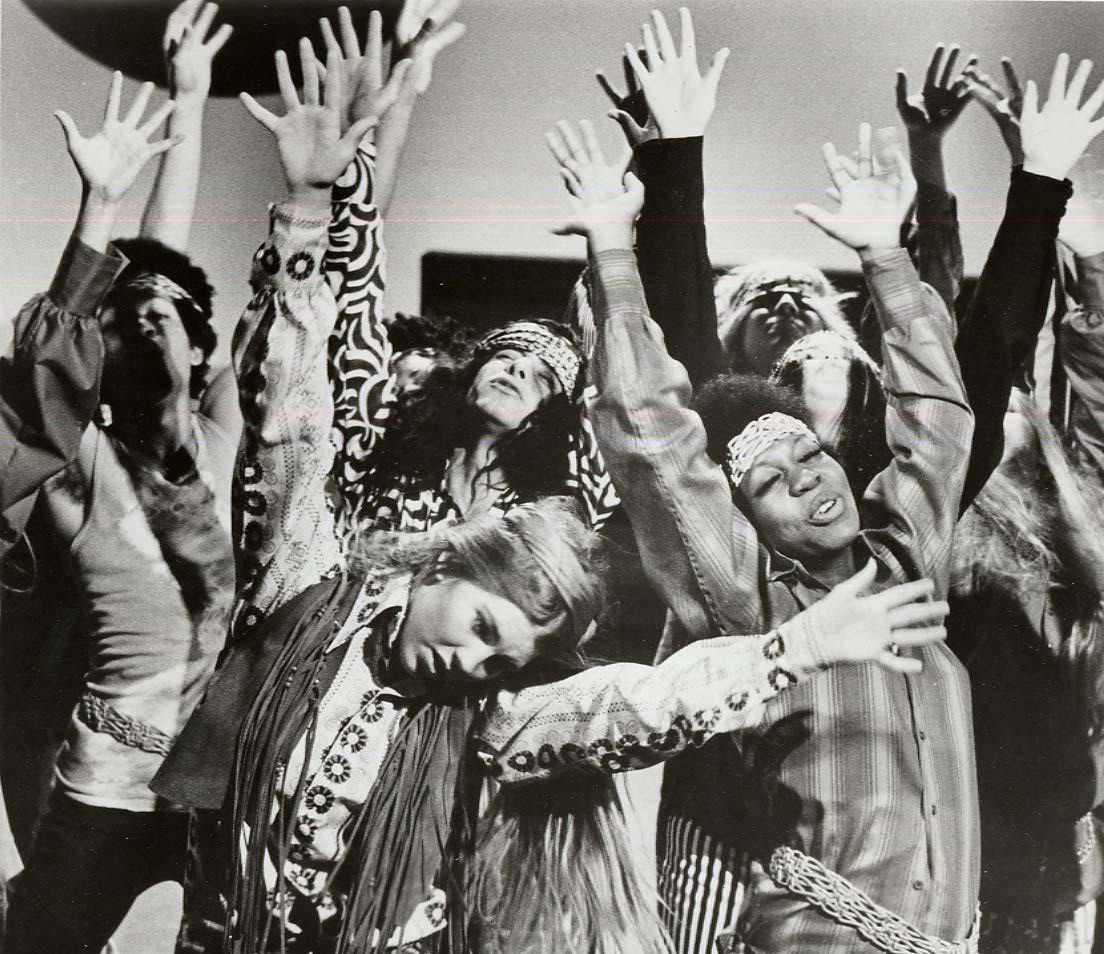
They become hippies. . .
We don't need all that stuff, man! We don't need your material goods, man! We don't need the Man, man!
And then the 70s and 80s rolled around. The counterculture had their own children which gave to way to new responsibilities, and all of a sudden . . .
Hippies got jobs.
These people went to work in offices. They created new products and status symbols. The PC, the walkman, and every other device that created individuality and portability. Families didn't gather around technology anymore. Individuals did. Look at the names of the products. The Personal computer. The walkman. It all screams exclusivity and is targeted at just single people. No groups.
I don't want anybody else listening.
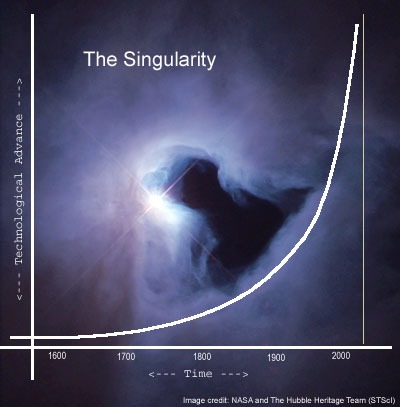
Expand technology outward and what do we have in the '90s, 2000s, and 2010s? Even more personal technology. We've got ipods that hold hundreds of collectively, curated and personally tailored music included with headphones so we're the only ones listening. We can watch movies and TV shows on personal screens. We can handle all our finances, and buy everything we need without ever interacting with a human. We don't just have phones anymore, we have smart devices. And they are only going to keep getting smarter. And more personal. Until eventually we reach . . .
Also, as a quick note. What's the massive undercurrent for all new technology and new advances in the last 50 years?
The first step is obviously to grab somebody's attention. It's the moment of "Hey you!"
The best ways to nab attention are to educate and entertain. You have to be outlandish and outrageous, so you'll get noticed, but it's also important to have a product or service worth all that attention.
"Our brand Ski Poles are fire-resistant!"
Interest
This is the "You want!" portion of the portion of the pitch. You talk up the benefits and never disclose the bad news. You create buzz. A good trick is to act like you're revealing a secret to a customer. They'll feel like they can be trusted and everyone likes the feeling of being an insider.
"You look at the camera too much."
Desire
The "We've got!" statement. Now that they're interested, you make the product or service available, thus turning their interest into desire. Maslow is a key figure here. Of course, we all desire safety and comfort, but also intellectual pursuits and the ability to simplify our lives. How will whatever you're selling play-in to all that?
Action
"Buy Now."
Why is the "now" so important? Because it's all about creating scarcity and demand. People are lazy, and if we don't buy or act or order "now," we'll start think more rationally.